Your impact
Each year, you make it possible to deliver compassionate, innovative care to tens of thousands of people – while advancing critical research that saves and improves lives throughout BC.
Advancing life-saving research

Rewriting the prognosis for sickle cell disease
Dammy Ogunseitan is a lifelong soccer fan who recently fulfilled a dream: traveling across Europe to watch his favourite teams play. It’s a remarkable shift from the life he once knew—one dominated by hospital stays and chronic pain caused by sickle cell disease (SCD).
Diagnosed at six months old, Dammy was given a grim prognosis: he wouldn’t live past 18. But thanks to medical advancements and the care he received at St. Paul’s Hospital in Vancouver, he recently celebrated his 40th birthday.
SCD is a genetic disorder that causes red blood cells to become misshapen and block blood flow, leading to intense pain and serious complications like strokes, blindness, and organ failure. Dammy describes the pain as relentless: “Imagine breaking your hand and shaking it nonstop. That’s the level of pain you’re in constantly.”
Dr. Linda Vickars, a hematologist renowned for her work in SCD, offered Dammy a new perspective. “She was the first doctor to tell my mom, ‘Let’s not focus on death. Let’s focus on quality of life,’” Dammy recalls. Under her care, Dammy began to see a future beyond pain.
“It was a life-defining change,” Dammy says. “I’ve gone from someone who was just waiting to die to someone who is actually living.”
Your gift changes lives
“I wouldn’t be here if it wasn’t for St. Paul’s Hospital. They made this all possible.”
– Dammy, grateful patient and St. Paul’s Foundation ambassador
A year of breakthroughs

Our donors
You make this care possible
We are grateful to our generous donors who make innovative, compassionate care possible. Your support is improving lives throughout BC.
-

New St. Paul's Hospital
Djavad Mowafaghian Foundation’s $2.5 million donation to fund research and innovation at the new St. Paul’s Hospital
-

Heart
From healing to giving: Heart surgery patient pays it forward to Lights of Hope with support from her company, Grosvenor
-

Lung
The Sky is the Limit
Diagnosed with cystic fibrosis (CF) at just three months old, Andrew Brownell raised money to support the CF Mental Health Fund. -

Your impact
Your generosity has made it possible to provide exceptional patient care throughout this past year and helped to build one of the most advanced hospital campuses in Canada.

Jim pattison medical campus
Celebrating year four of construction on the new St. Paul’s Hospital on the Jim Pattison Medical Campus.
Progress is steady and spirits are high as the hospital moves closer to completion, powered by the efforts of construction teams and the support of people like you who share in our vision. Crews are working on exterior façade finishes, interior finishes, landscaping, and road work.
Construction began on the Clinical Support and Research Centre (CSRC). The CSRC is adjacent to the new St. Paul’s Hospital on the Jim Pattison Medical Campus and will connect physicians and scientists to seamlessly integrate research and patient care.
Construction will be completed in 2026 and the hospital will be open to the public in 2027.
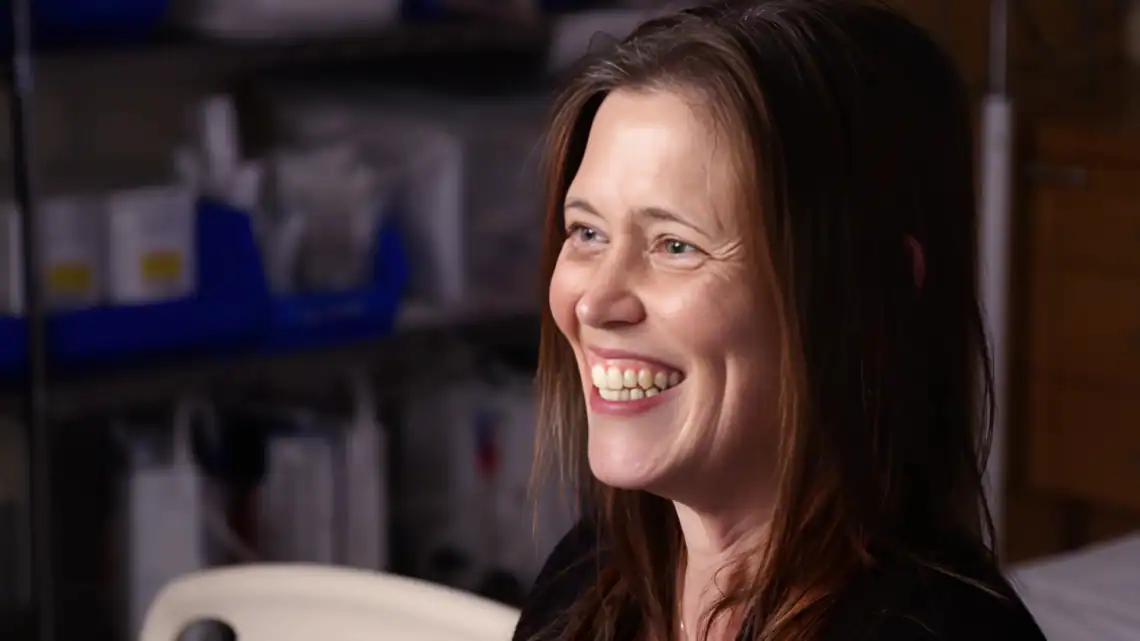
Putting pain on ice: how cryoneurolysis is changing pain management without the use of opioids
Cryoneurolysis is a transformative, drug-free pain management technique now being pioneered at Providence Health Care in Vancouver. Using extreme cold to temporarily block nerve signals, this treatment offers weeks to months of relief without the risks of opioids.
Dr. Michael Jew, who leads the hospital’s cryoneurolysis program, is applying this technology in a novel way: to manage acute surgical pain. His team’s work represents some of the first documented cases in medical literature, with promising outcomes that could reshape how pain is treated.
Unlike traditional medications that affect the entire body, cryoneurolysis precisely targets pain at its source, preserving nerve structure while allowing natural regeneration. This precision is especially vital in the context of Canada’s opioid crisis, where nearly 10% of opioid users report problematic use.
Your support is helping this innovation expand—offering safer, smarter pain relief to more patients, with the potential to reduce reliance on opioids nationwide.
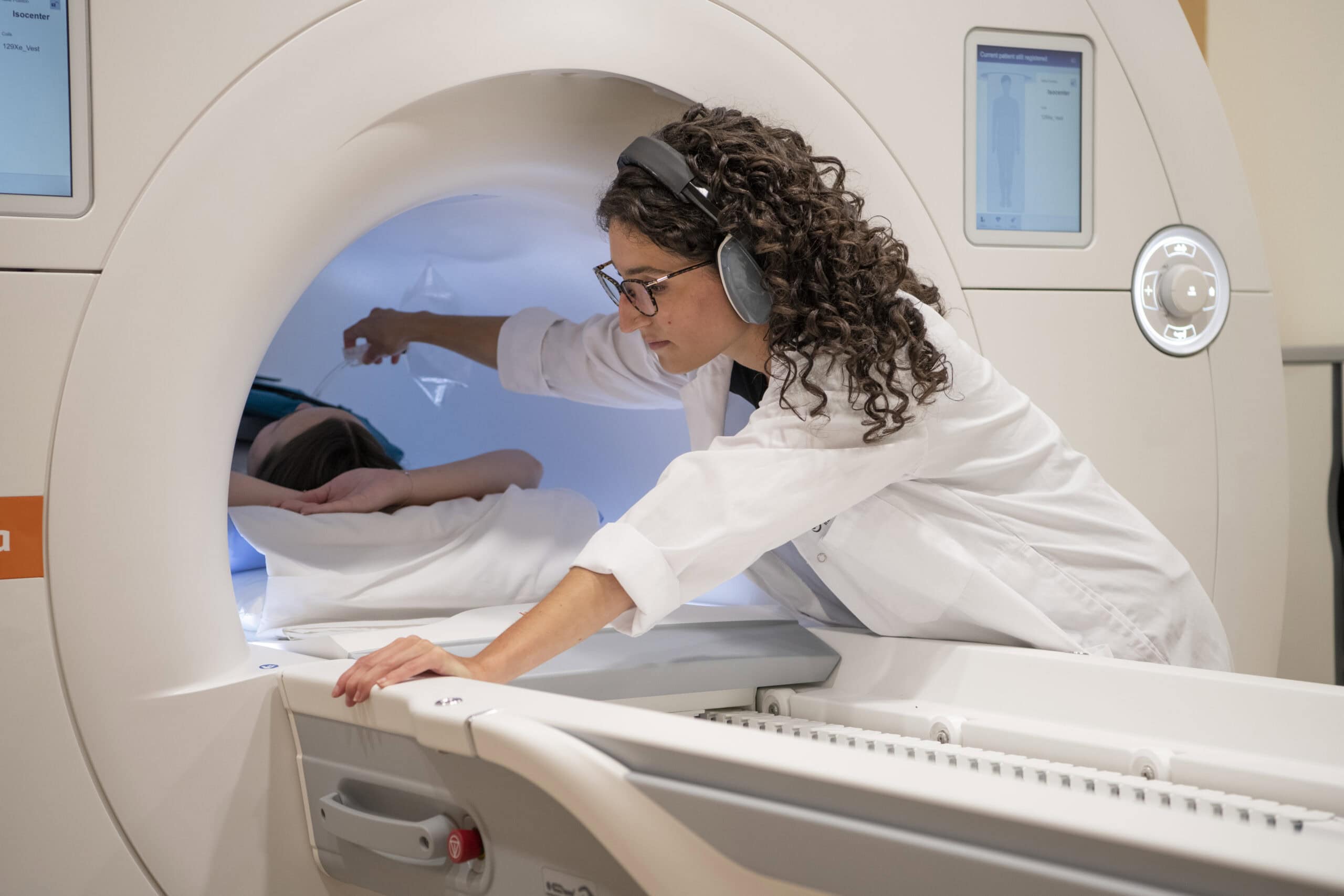
Research at St. Paul’s Hospital uncovers cause of lung long COVID
New research from the Centre for Heart Lung Innovation (HLI) at St. Paul’s Hospital has identified inflammation in the lungs’ smallest airways as the cause of pulmonary long COVID.
A research team led by HLI Director, Dr. Don Sin, used xenon MRI, an advanced imaging technology, and single-cell sequencing of lung samples, supported by the HLI’s biobank team, to uncover the underlying mechanism behind persistent respiratory symptoms in long COVID patients. These findings were published in three articles in the European Respiratory Journal.
The HLI research team focused on identifying the cause of pulmonary long COVID, which presents with persistent lung symptoms and accounts for approximately one-third of long COVID cases.

NICU simulation training builds life-saving teamwork
In the Neonatal Intensive Care Unit (NICU) at St. Paul’s Hospital, every second counts. When a pregnant woman in distress arrives at the Teck Emergency Centre, multiple teams converge to save mother and baby – anesthesia, respirology, maternity and NICU – and they need to coordinate their actions quickly.
Simulation training is critical to successful cooperation among team members when high-risk, low-frequency events arise, and donor support helps to make this training possible.
Every month, an interdisciplinary team—including educators from maternity, NICU, obstetrics, and pediatrics—collaborates to deliver themed simulation sessions. These hands-on scenarios bring together obstetricians, family physicians, midwives, nurses, and residents to practice responding to complex perinatal emergencies in a safe, supportive environment.
Quarterly, the team expands their scope to include the Operating and Emergency Department, simulating Code Pink events (Pediatric Emergency and/or Obstetrical Emergency) that involve anesthesia, respiratory therapy, and surgical teams. These sessions often mirror real-life emergencies, such as a mother experiencing placental abruption requiring an emergency C-section and neonatal resuscitation.
The impact of this training is clear: stronger communication, faster response times, and a more confident, connected team. In some cases, a simulation can also help to process a difficult real-life situation, allowing staff to regain confidence and return to clinical duties with renewed assurance. By practicing in a safe, controlled environment, health care professionals are better prepared to respond effectively when every second counts.
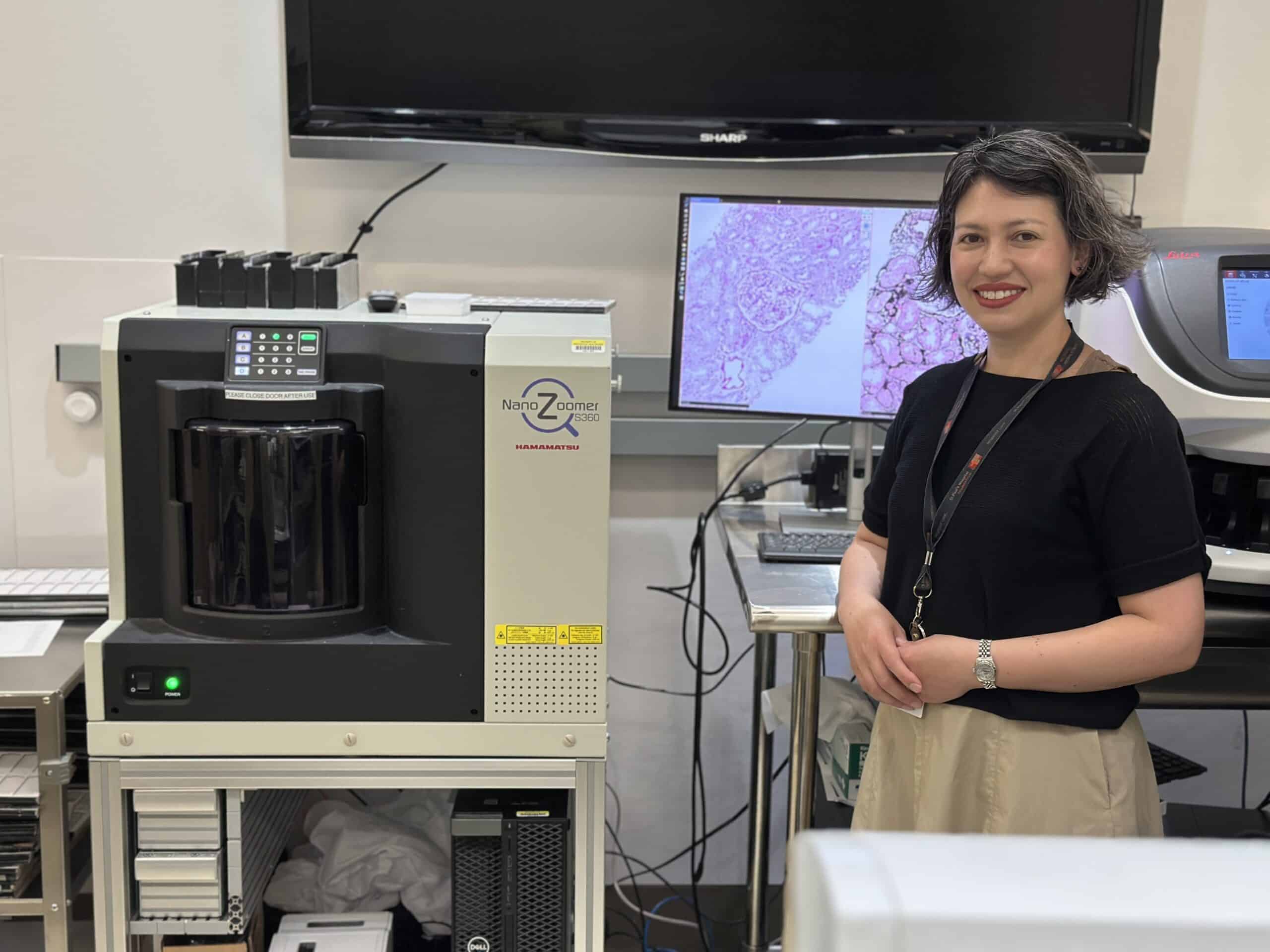
High-speed scanners empower faster, more accurate diagnoses
Kidney patients across BC are now benefiting from faster, more accurate diagnoses through digital pathology thanks to the purchase of a high-speed NanoZoomer digital slide scanner, made possible through donor generosity.
The new digital system significantly reduces the time between biopsy and diagnosis by making it possible for nephrologists throughout the province to rapidly share high-resolution biopsy images.
For patients with complex conditions like lupus nephritis or those undergoing kidney transplants, this speed is critical. Digital access to multiple biopsies allows for efficient comparison and more informed treatment decisions.
Dr. MeiLin Bissonnette, Director of the Provincial Renal Pathology Laboratory at St. Paul’s Hospital, expressed her deep gratitude on behalf of the entire pathology team. “Your support was the catalyst for a cascade of innovation,” she shared. “It allowed us to digitize the entire provincial renal biopsy service and build the IT infrastructure needed to support province-wide diagnostic collaboration.”
The digital pathology lab at St. Paul’s processes the highest number of samples in the province.
By centralizing diagnostic imaging and enabling province-wide remote access, the lab has dramatically improved the efficiency and consistency of kidney care—ensuring patients receive timely, expert-informed diagnoses no matter where they live.

Canada’s first public, non-profit long-term care village
Since moving into Providence Living at The Views (PLTV) in Comox, BC, one year ago, residents and care operations have expressed an overwhelming sense of home.
Based on the concept of a dementia village, Providence Living at The Views is a true home for 156 residents with varied and complex health issues including dementia. This is a place that recognizes residents as individuals with unique needs and interests, and provides them with opportunities for choice, spontaneity, social connections, and day-to-day activities that give their lives joy and purpose.
The physical environment encourages residents’ participation in everyday activities like laundry, food preparation, and social bonding with their housemates and the wider village community, if desired.
Providence Living at The Views includes amenities you’d find in most villages: a grocery store, a café, a courtyard, gardening space, a playground, a community centre, and places for spiritual worship.
Unique features are an onsite daycare for intergenerational connections, and an Indigenous Gathering Space developed with the K’ómoks Nation as part of our commitment to reconciliation.
All of these elements encourage daily pleasures, and a life well lived.
We’re also working on a comprehensive, first-of-its-kind research study to advance the knowledge base on dementia villages. The research has already begun with household pilots in Comox and Vancouver.
At Providence Living at The Views, Providence will continue to collect real-time data from residents, staff, and families to help refine the model as we build more person-centred care villages across the province.
The new care villages opening across BC in the next five years – including in Vancouver and Prince George – will forever change what it feels like to live in a long-term care setting.
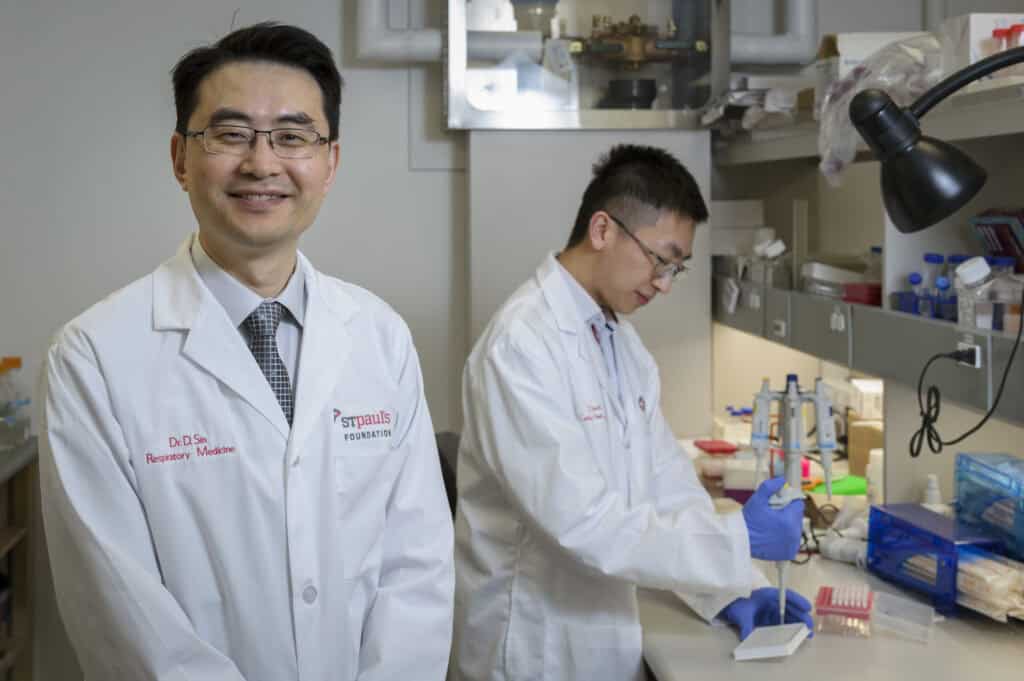
“I am so grateful to our donors. Your support allows us to fulfill our ultimate mission of providing ‘exceptional care through exceptional science’ for British Columbians.”
Dr. Don Sin
Director and de Lazzari Family Chair in Heart Lung Innovation at HLI: Tier 1 Canada Research Chair in COPD
Thank you
Your gifts make a profound and lasting difference to every patient, resident, family, and caregiver. We are grateful for your trust and generosity.