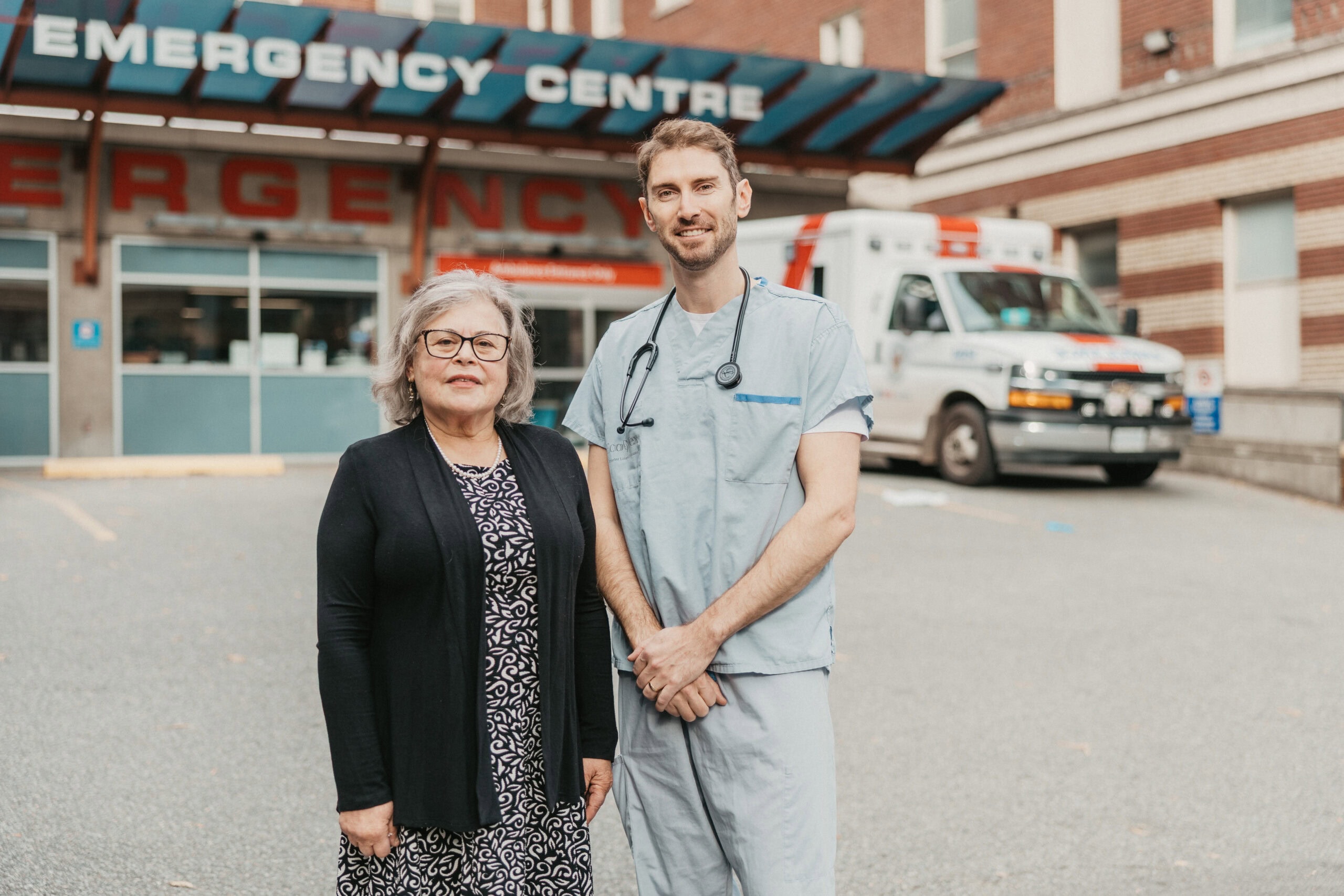
It began with a sudden lump, escalating pain, and a fear Bonnie Quam simply couldn't shake: What if it's cancer?
She turned to her family physician, who sent her to St. Paul's Hospital. Bonnie arrived at the Teck Emergency Centre on Burrard St. frightened and searching for answers.
She was quickly assessed and connected to the care she needed. Doctors soon determined that the cause was not cancer, but a serious, infected fistula. What followed was a journey that required multiple emergency visits, specialist care, and months of treatment to prevent dangerous complications.
During a scary and deeply personal health crisis, Bonnie is grateful that she received expert, timely, and compassionate care. What she remembers most vividly, however, is receiving treatment for a highly sensitive condition in a crowded space with little privacy.
"It was embarrassing to me. It was in this tiny little cubicle...and on each side, separated by a curtain, were two other people," she says.
Bonnie's experience highlights an important truth: St. Paul's Hospital is renowned for the quality of its emergency care, yet the current department was built for a different era of medicine.
But change is coming at the new St. Paul's Hospital on the Jim Pattison Medical Campus. Its unique Emergency Department (ED) model will combine the excellent care patients already receive with a modern environment designed to improve privacy, efficiency, and the overall patient experience.
Emergency care excellence
For generations, St. Paul's Hospital has delivered expert emergency care for patients facing urgent and complex health challenges. It's one of British Columbia's busiest and most specialized emergency departments, caring for about 100,000 patients each year.
Yet the department wasn't built to handle that volume. In 2010, roughly 65,000 patients came through its doors annually. Even as patient volumes have surged, teams have continued to provide exceptional care.
Patients benefit from a culture of compassion that treats people, not just conditions, alongside collaboration across disciplines that helps patients connect to the right care.
Many don't realize that innovative solutions in emergency care are possible because of long-term research projects at St. Paul's Hospital that guide each doctor's decisions. For over 30 years, the Emergency Medicine Research Group has been studying how to improve care for patients who come through the ED. The team published fifty papers in medical journals in 2024 alone.
Behind every emergency visit is a team of physicians, nurses, researchers, and other health care professionals working together to deliver the best possible care. At the new St. Paul's Hospital, those teams will be supported by an innovative ED designed for the future of medicine.
The Teck Emergency Department at the new St. Paul’s Hospital: Designed to be more private, larger, and faster
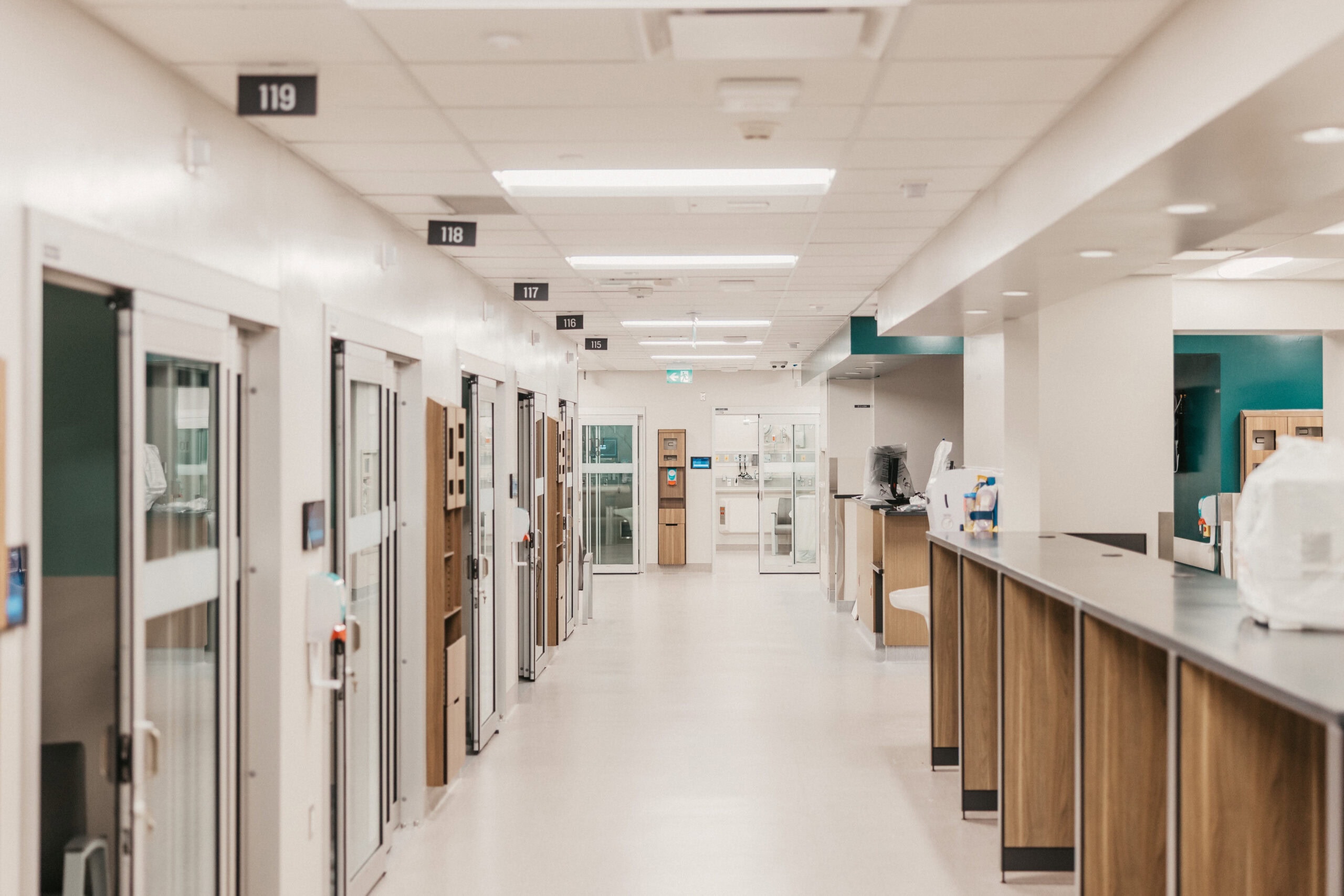
The new St. Paul’s Hospital, opening in 2027, will introduce a “zone model” Emergency Department that is modelled on designs already showing results in other parts of Canada, Europe, and the United States. Rather than one large, sometimes chaotic Emergency Department, it will be divided into four separate zones, including a dedicated mental health zone, each designed to function as its own mini-ED, with its own dedicated care team.
Patients will be triaged to their assigned mini-ED zone. No more funneling back and forth to a crowded central waiting room wondering what's next, and patients will be seen by a consistent medical team within the same zone for the duration of their ED visit.
“The model is designed to strengthen the existing culture of patient-centred care at St. Paul’s Hospital,” says Dr. Spencer Heffernan, Emergency Physician & Emergency Department Co-Lead, St. Paul’s Hospital. “Dedicated interdisciplinary teams will work together throughout each shift, enhancing collaboration and communication to deliver more seamless care for patients.”
Compared to just five rooms at the current St. Paul's Hospital, the new ED will have more than 70 care and treatment spaces, most with three walls and a glass sliding door. The design is aimed at keeping wait times down.
For patients, this means more privacy, more transparency, and more consistency. For staff, it means working as a more cohesive team.
Giving future generations the care they deserve
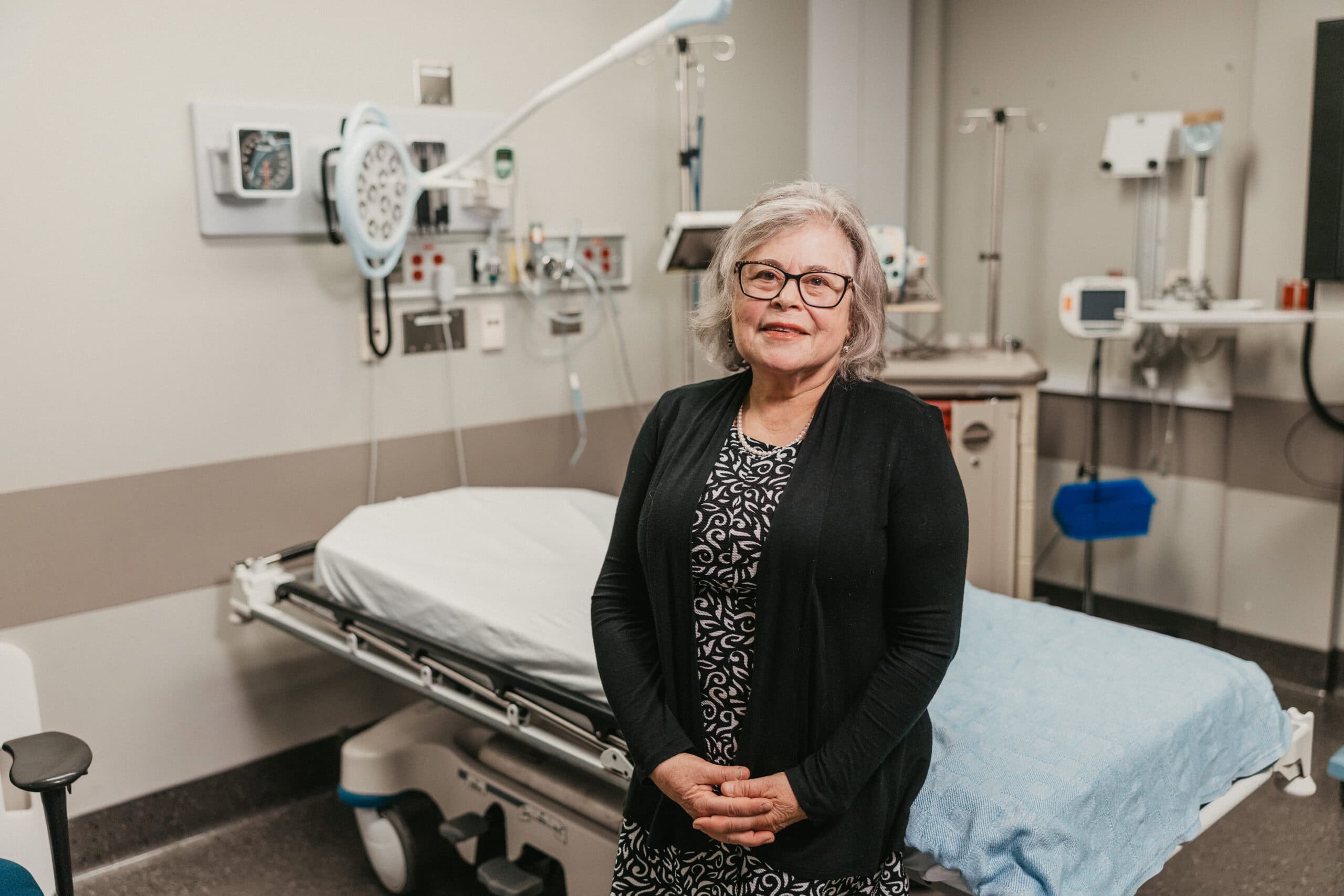
For patients like Bonnie, it’s not just a redesign: it's about dignity. She is particularly excited about the changes and how privacy has been prioritized in the new ED.
"I can see what is going to be available to folks in the new facility in terms of dignity, respect, and privacy,” she says. “What it offers in terms of privacy for people will be a real bonus for everybody who is facing challenging medical issues.”
Bonnie's gratitude for the care she received inspired her to become a donor to St. Paul's Foundation, so that future patients can receive the same compassionate care and support she did during some of the most challenging moments of her life.
"As a human being, it's really important to me to give back," she says.
Together, we can make healing better possible and help shape the future of health care in BC. Donate today.