Published Promise 2026
In just five years, nearly one in four people in BC—more than 1.3 million—will be over the age of 65. At the same time, the number of BC residents living with dementia is expected to more than triple, increasing by 218% between 2020 and 2050.
Aging well is one of the defining health challenges of the next generation. And for many older adults, the current system isn’t built to meet it. Care is fragmented across multiple locations. Wait times for specialized services are long. Patients, families, and caregivers are often left to navigate on their own.
In early 2027, that changes.
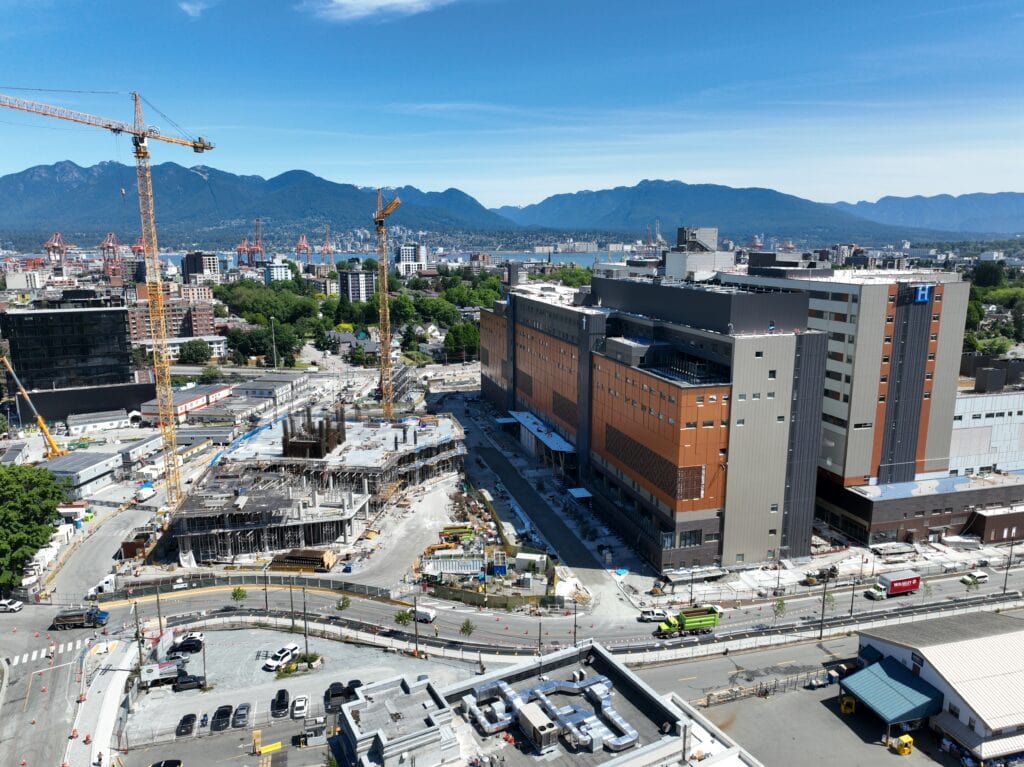
The Shinozaki Family Centre for Healthy Aging (SFCHA), opening with the new St. Paul’s Hospital on the Jim Pattison Medical Campus, will be the first purpose-built centre of its kind in BC, dedicated entirely to the care of older adults.
Closing gaps in geriatric care
Located on the ground floor near the hospital’s main entrance, the SFCHA will bring specialized geriatric care together with interdisciplinary assessments, expedited referrals, and outpatient services—all in one place. It will be the new home for several specialty clinics currently operating together at St. Paul’s Hospital, continuing their work in space designed for the future of older adult care.
“What we really are hoping to achieve is clear pathways, strong partnerships, and high-quality clinical care that supports better aging for our population,” says Kimberley Vaulkhard, project director for the SFCHA.
Central to that vision is a simple philosophy: no wrong door. Kimberley wants every patient who walks in to hear the same message, “You’re in the right place.” In the future, if a geriatrician appointment isn’t the right fit, staff will be equipped to connect them with something that is, whether that’s a community volunteer organization, a home support service, or another specialty program.
For patients already in the system, the shift will be just as significant. Today, many wait weeks or months for a specialist appointment with little support in between. As the Centre grows and stabilizes, the vision is to reach people earlier, with screening, resources, and referrals to community partners while they’re still on the waitlist.
At the first signs of change
Aging affects more than the body. Up to 15% of people over the age of 60 experience subtle changes in memory and thinking that go beyond normal aging but aren’t yet severe enough to show up on standard testing.
This is the population the Early Intervention Memory Clinic (EIMC) was built to serve. Launched at St. Paul’s Hospital in January 2025, the EIMC is one of the only services of its kind in Canada, a clinic specifically designed for older adults who are just beginning to notice changes, long before a dementia diagnosis is on the table.
“There’s a lot of stigma and fear around cognitive changes and dementia,” says Ben Nehra, manager of the EIMC. “But intervening early, when people are just starting to notice changes or even before they notice changes, gives us a critical window to influence the trajectory.”
That window matters because many of the factors that drive cognitive decline are modifiable. Physical activity, nutrition, sleep, social engagement, and management of conditions like high blood pressure and diabetes all play a role in long-term brain health. Caught early enough, lifestyle changes can slow decline, reduce risk, and in some cases help people feel sharper and more confident than they did before they walked in.
At the EIMC, every participant meets one-on-one with an occupational therapist to review daily functioning and brain health habits, complete a cognitive screen, and begin a personalized cognitive wellness plan.
Depending on the assessment, participants may also meet with a geriatric specialist to review medications, cardiovascular risk factors, and order further testing if needed. From there, they can join group programs like Brain Health in Action, attend Q&A sessions with clinicians, and take part in exercise classes run in partnership with the BC Brain Wellness Program.
Since the clinic opened, Ben says, self-referrals have risen steadily, a sign that people are finding the courage to come forward earlier.
Building on what works
When the Early Intervention Memory Clinic (EIMC) moves into the Shinozaki Family Centre for Healthy Aging (SFCHA) in 2027, it will continue to be embedded within a multidisciplinary team of specialists already working together at St. Paul’s Hospital today: geriatricians, geriatric psychiatrists, physiatrists, occupational therapists, rehabilitation specialists, and allied health professionals, all working in one integrated space.

Purpose-built facilities—including an instrumental activities of daily living (IADL) suite and a dedicated mobility gym—will support real-world assessment, rehabilitation, and functional independence. The Centre will also include the Shinozaki Family Wellness Garden, offering patients and families an outdoor space for rest and reflection during care.
For Kimberley, who has worked across the BC health system in many roles, it’s the spirit at St. Paul’s Hospital that makes the work possible.
“The culture of teamwork and quality draws me to work here,” she says. “When we are united with a shared purpose, some of our most daunting work feels more manageable.”

Care that reflects everyday life
At the heart of the new Shinozaki Family Centre for Healthy Aging will be an on-site instrumental activities of daily living (IADL) suite, a small simulated apartment complete with a bedroom, a kitchen, and a bathroom with a traditional bathtub to reflect a typical home bathing scenario.
“People don’t live in the clinic,” Kimberley says. “They live their lives outside those walls. The IADL suite lets us assess what someone is actually going to do at home, whether they can safely take a bath, prepare a meal, or get up from a chair.”
The results of those assessments shape everything from discharge plans to community referrals. When the practical, day-to-day tasks become impossible, Kimberley notes, people often can’t stay in their homes and end up in a hospital or in long-term care.
The SFCHA will also feature a dedicated mobility gym for physiotherapy and rehabilitation, with floor-to-ceiling windows and space for falls prevention programming and group exercise.
As the population ages, the need grows more urgent. Your support helps bring earlier outreach, faster screening, and personalized care to thousands of older adults in BC.