For years, Gail Lane relied on a smartphone app and the kindness of friends to help her get dressed. Matching socks? A guessing game. Coordinating outfits? A team effort. “My friends used to tease me about wearing two different socks,” she laughs. “Now I can see for myself—and I’m wise to their tricks if they try to yank my chain.”
After a decade of blindness, Gail is rediscovering the world. Her restored sight means more than just fashion freedom: it’s a return to independence and delight. Each day brings new glimpses: bright colours, familiar shapes, the delicate blooms of heather outside her home in Victoria, the outline of a loved one’s face.
And behind it all is a groundbreaking surgery and a team whose compassion made the impossible feel within reach.
A tooth, an eye, and an innovative surgeon
It’s not every day that a medical procedure involves implanting a tooth into someone’s eye— but for patients like Gail, that’s exactly what brought the possibility of sight. Osteo-odonto-keratoprosthesis (OOKP), often referred to as ‘tooth-in-eye' surgery, is designed for patients with severe corneal blindness when traditional transplants aren’t an option.
It involves embedding a plastic lens into a patient’s own tooth and then sewing it over their eyeball. Though it may sound odd, the tooth provides a sturdy frame for the lens and it resists rejection from the patient’s immune system.
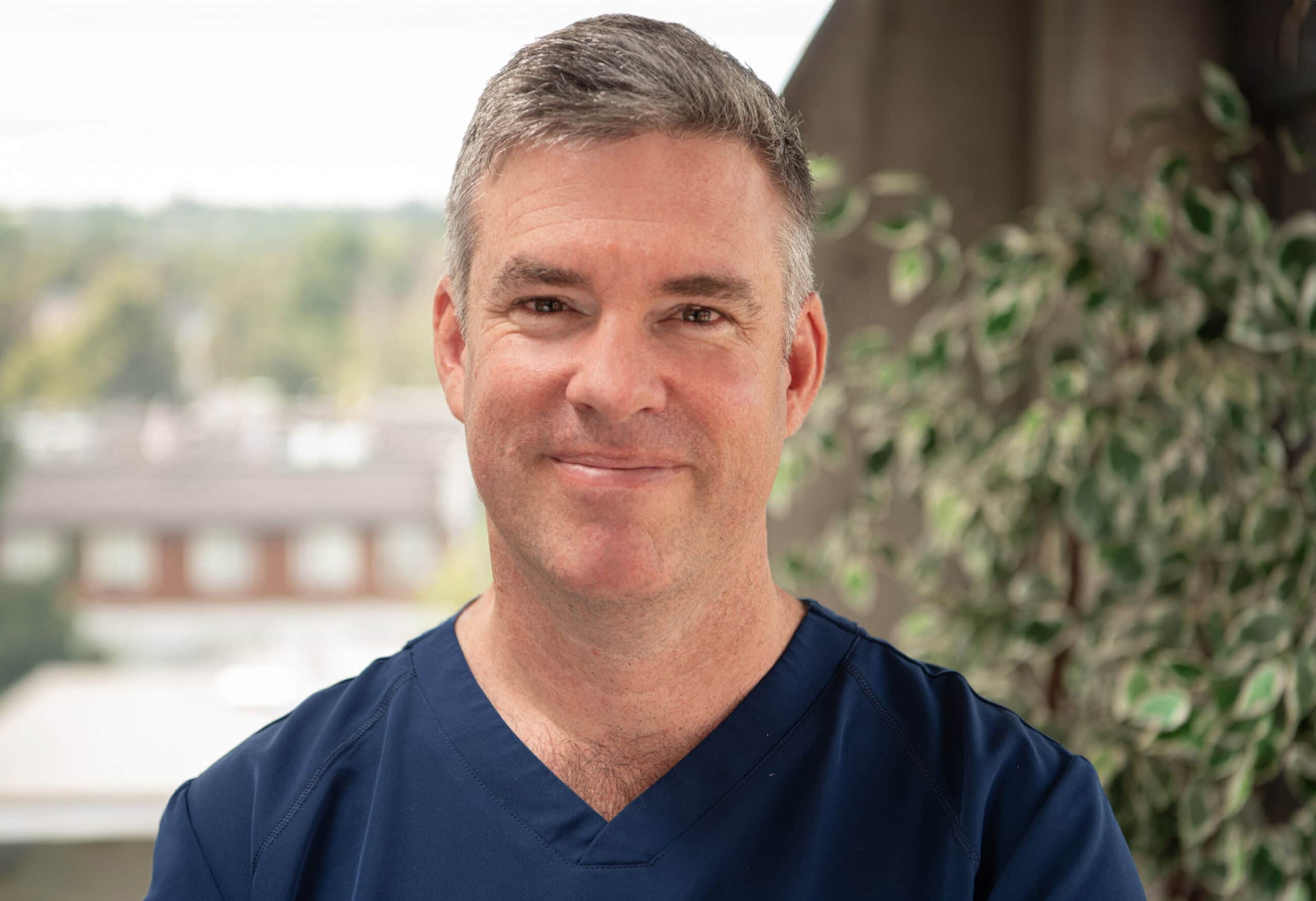
Tooth-in-eye surgery was brought to Canada by Dr. Greg Moloney, an ophthalmologist at Providence Health Care’s Mount Saint Joseph Hospital. Originally from Australia, Dr. Moloney trained internationally – including at UBC – and led the development of an OOKP program at Sydney Eye Hospital before returning to Vancouver in 2021.
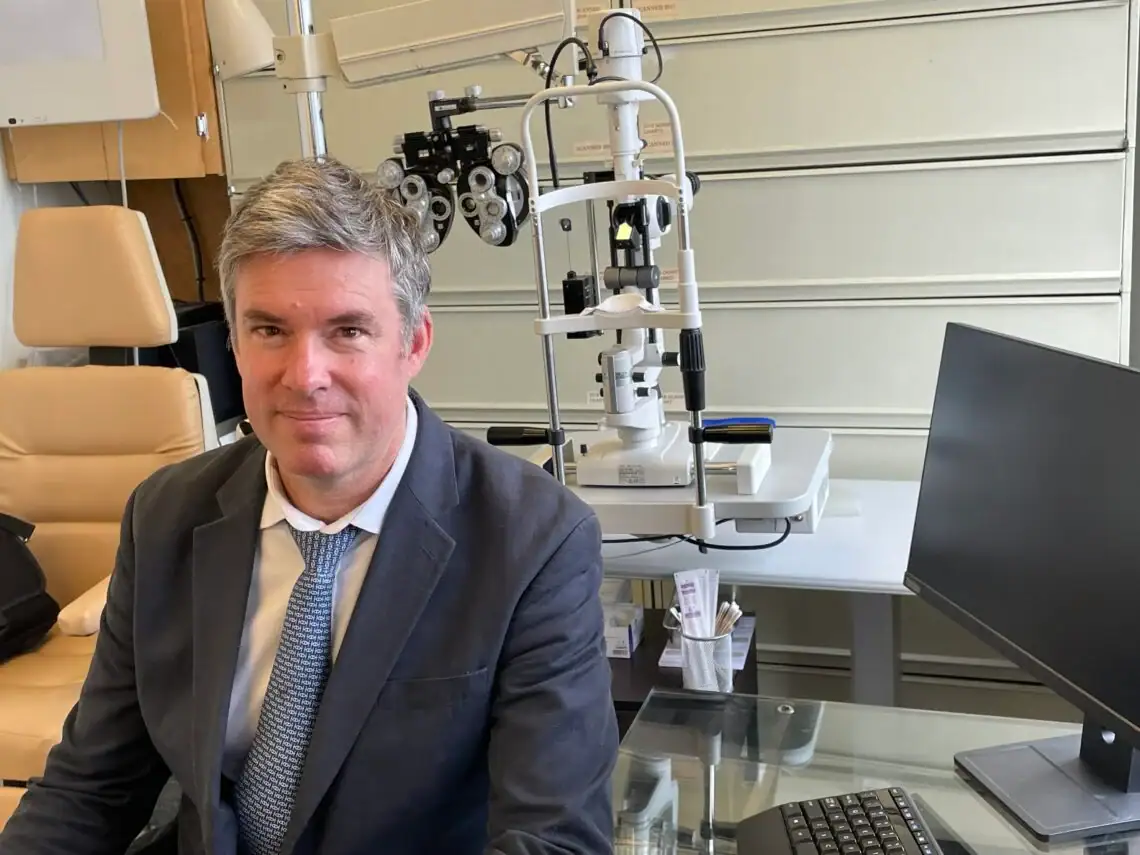
The surgery unfolds in two stages, each lasting six to eight hours and requiring a team of specialized surgeons. Despite its effectiveness, establishing an OOKP program is no easy feat, demanding significant logistical coordination and financial investment. After his return to Vancouver, Dr. Moloney set out to create such a program.
With support from St. Paul’s Foundation donors alongside Providence Health Care’s Department of Ophthalmology, he spearheaded Canada’s first tooth-in-eye clinic.
“The training and the effort put in by the nursing staff and surgical team at Mount Saint Joseph Hospital has been outstanding,” says Dr. Moloney. “I’ve been highly impressed by the determination of the staff at Providence, who have made this program a reality.”
In early 2025, Dr. Moloney and the team at Mount Saint Joseph Hospital made Canadian medical history by performing the country’s first tooth-in-eye surgeries on three patients.
The long road back to sight
Gail lost her sight at age 64 after a rare reaction to seizure medication triggered Stevens-Johnson syndrome, which severely damaged her corneas. When she first met Dr. Moloney, she couldn’t see him, but she quickly came to trust him and was excited about tooth-in-eye surgery.
Gail’s vision returned more gradually than it did for the other two patients who underwent the same procedure. While it was hard not to compare, she reminded herself that everyone recovers at their own pace. Dr. Moloney reassured her throughout the process, expressing confidence that her sight would continue to improve – and it did.
To start, she could only see an increase in light, followed by large, blurry objects. One of her first clear images was her partner’s guide dog, Piper, wagging his tail before his entire body came into view. Then she saw Phil, her partner, for the very first time. “We met when we were both blind,” she says. “It was emotional. I was nervous. So was he.”
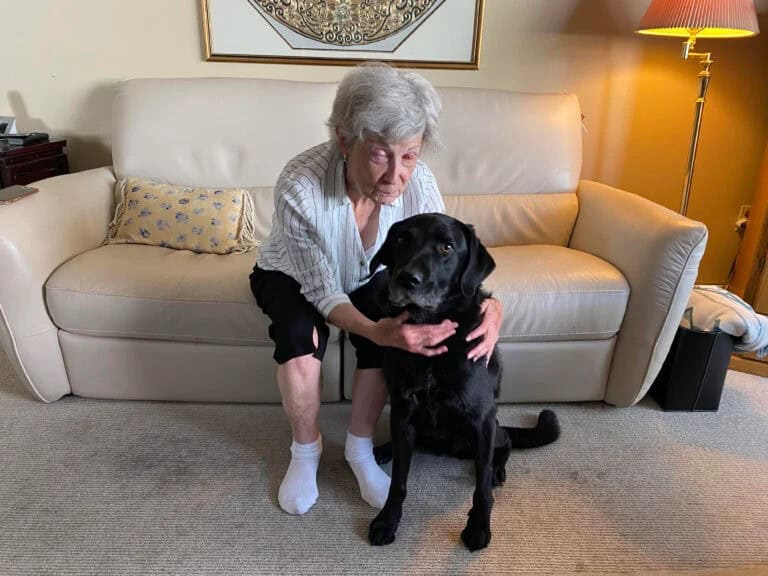
During a checkup after her final surgery, she finally saw Dr. Moloney’s face, too. “It's so nice for me to see the people that have taken such good care of me,” Gail says. “I'm so grateful.”
Today, Gail’s world has opened up in many ways. At home, she can now navigate without relying on touch.
“I can see where everything is,” she says. “It’s much easier to move around.”
She’s spending more time outside, enjoying the sight of trees, flowers, and neighourhood pets. Soon, she hopes to return to volunteering at the SPCA, where she’s missed her time with the animals. She’s also rediscovering simple pleasures: choosing outfits, watching television, preparing meals with more confidence, and eating in restaurants without worrying if her fork is empty.
Throughout her journey, Gail felt deeply supported by the people in her life. Her ophthalmologist in Victoria even traveled to Vancouver to assist with the surgery, a gesture that moved her.
“It was a hard path at times,” she says. “It was a long road and I couldn't have done it without the medical team, all my family, and very good friends.”
Her positive experience with Dr. Moloney and the team at Mount Saint Joseph has left a lasting impression.
“The medical staff were so enthusiastic and loved what they were doing. This is a special and rare procedure, but it’s a wonderful thing,” she says. “I can't say how grateful and appreciative I am because it's been like a miracle to me.”
Hope is pretty magical. When you give to Lights of Hope, you support compassionate care, research, and the life-changing treatments that make extraordinary recoveries like Gail’s possible.