Cynthia has a mental map of almost every bathroom in the Lower Mainland. Driving to the North Shore? That meant a strategic pit stop at the McDonald’s downtown. Walking the Richmond Dyke Trail? Only one kilometre to salvation. For the past five years, every outing required calculation, strategy, and backup clothing — just in case she didn’t make it in time.
Slowly, Cynthia’s world shrank. The fear of having an accident overpowered her love of performances, going to sporting events, taking long walks, and seeing friends. Even the simplest activities felt risky.
“It was terrible,” she recalls. “Nobody wants to live their life looking for the next bathroom.”
The moment that truly broke her heart came when she couldn’t attend a friend’s funeral in White Rock. She knew she wouldn’t make it through the drive or the service. “I thought, ‘I can’t live like this anymore’. I knew I needed help.”
A solution after years of silence
Cynthia’s health journey began nearly four decades ago, after giving birth to her first child. Persistent pelvic floor issues followed her into midlife, eventually progressing into fecal incontinence when she reached menopause.
She’s far from alone. Research suggests about 10% of Canadian women live with fecal incontinence. Among those with pelvic floor disorders, the numbers climb even higher - up to 41%. But because the condition carries so much stigma, many people never tell anyone or receive care.
“Quite frankly, as a woman, you suck it up - or I did,” Cynthia says. “But the rectal incontinence was so awful, it’s harder to suck that up.”
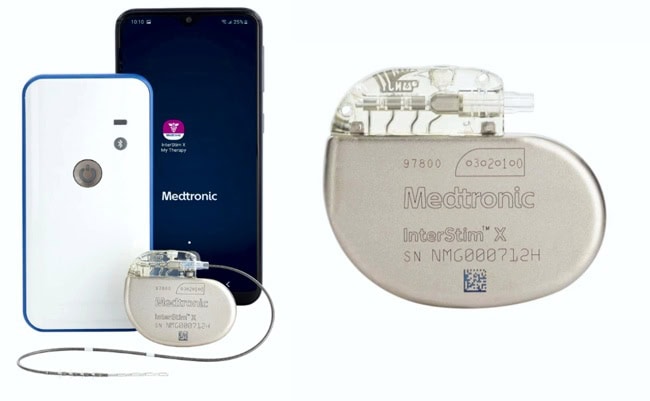
Cynthia was referred to Dr. Roxanna Geoffrion, a urogynecologist at St. Paul’s Hospital. The surgical options sounded invasive and daunting — far more than she felt ready to take on. Then she learned she might qualify for a new therapy trial: sacral nerve stimulation (SNS), which delivers gentle electrical impulses to stimulate the nerves that help regulate bladder and bowel function.
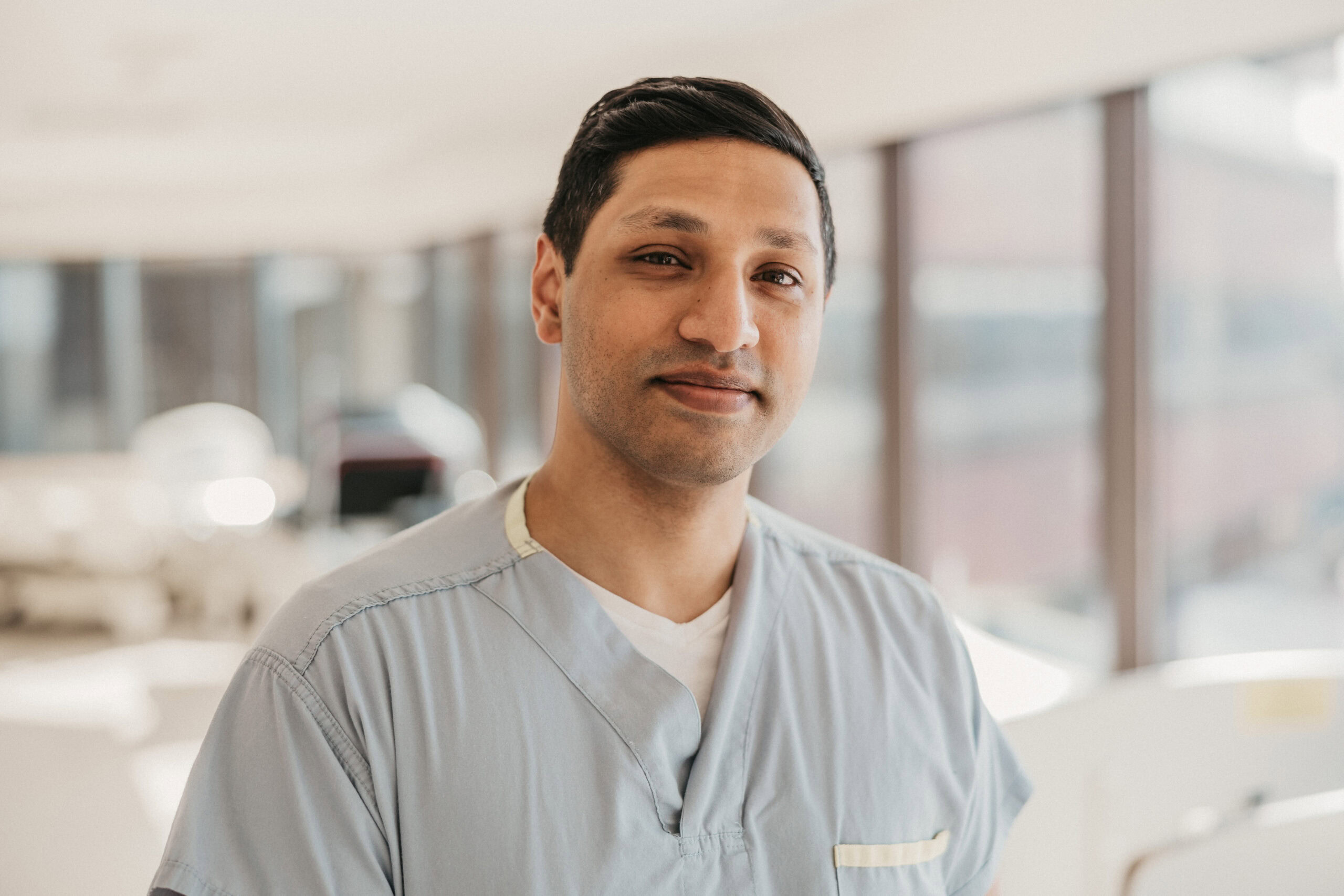
She figured she had nothing to lose and agreed to speak to Dr. Vishal Varshney, the inaugural Chair in Pain Management at St. Paul’s Hospital. When Dr. Varshney called her to discuss the trial, Cynthia was surprised by how relaxed and hopeful she felt — almost instantly.
“Some medical professionals can sound very clinical, but he just sounded like a normal guy. His bedside manner was wonderful, even though there was no bed and there was no side,” she says. “Then I met him and he's just so easy to talk to and to be honest with.”
In September 2025, Cynthia received a temporary SNS implant to see whether the device would work for her. To her astonishment, her symptoms disappeared almost entirely right away.
“It was a 95% improvement. It was like magic,” she says. “A couple of days later, my husband and I went for a nice, long six‑kilometre walk, and I didn't have to stop once.”
She received a permanent implant later that fall. Today, she says she lives with about a 60% reduction in symptoms — and for her, it’s nothing short of life-changing.
“It's improved my quality of life tremendously,” she says. “Was this issue going to be fatal? No. But to be able to live my life the way I want to live it – wow.”
Seeing a patient’s world open back up is exactly what inspires Dr. Varshney’s work.
“I always tell patients I’m not really a pain doctor — I’m a function doctor,” he says. “Our goal is to help people return to the things they love doing. To someone else it might seem like a small change, but for a patient who’s had their world shrink, our programs are groundbreaking.”
A collaborative pilot bringing new hope to patients in BC
Cynthia’s experience wasn’t just a one‑off miracle — it’s part of a pilot program bringing SNS treatment to BC for the first time.
Although SNS technology has been used elsewhere for years, it is still not widely available in Canada. Only about half a dozen centres offer the procedure. Until now, British Columbians had to travel out of province to access it — a barrier that made care impossible for many who couldn’t take time off work, leave family, or afford travel.
Dr. Varshney works in the Complex and Interventional Pain Program, which specializes in advanced neuromodulation therapies for patients living with complex pain conditions. Because SNS uses similar principles and technology as spinal cord stimulation — placing a small device that sends gentle electrical impulses to targeted nerves — the pain team already had the expertise, equipment, and experience to safely deliver this therapy.
With support from St. Paul’s Foundation donors, the pain team joined forces with colorectal surgery to launch BC’s first SNS pilot. Their shared goal: to give patients access to a therapy that can dramatically improve quality of life.
Early results are extremely promising. Participants in the pilot have reported a 70% reduction in weekly incontinence episodes.
These outcomes mirror Cynthia’s own experience. Activities that were once a source of panic – exercising, socializing, running errands – have become worry‑free again. She recently traveled to French Polynesia, where she proudly sported a white bathing suit on the beach.
“That’s a big deal for me - that wouldn’t have happened in the last decade,” she laughs. “Now, I can do what I want. It’s great.”
The Jim Pattison Medical Campus: The future of Healing Better

Stories like Cynthia’s reflect a future where patients benefit from more connected, collaborative, and innovative care — exactly what the Jim Pattison Medical Campus is designed to deliver.
Home to the new St. Paul’s Hospital and Clinical Support and Research Centre, the medical campus will set a new standard in care by improving access, privacy, comfort, safety, and healing for every patient. By bringing clinical care, research, and innovation together, we’re ensuring life‑changing treatments and discoveries are available to British Columbians when they need them most.
Patients will access a wide range of integrated programs and services in one central location, with stronger coordination between care providers and clinics. Instead of navigating a complex system, patients and families can focus on what matters most: healing.
Expanded capacity and leading-edge technology
Few people are looking forward to this transformation more than Dr. Varshney, whose pain program services and colleagues are currently scattered across multiple floors of St. Paul’s Hospital. At the new hospital, the program will be consolidated on a single floor, removing physical barriers that currently slow care.
The Jim Pattison Medical Campus will dramatically expand what’s possible for patients. With modern interventional suites and advanced imaging, teams like Dr. Varshney’s will be able to perform complex neuromodulation procedures more efficiently — potentially doubling or even tripling the number of patients they can treat.
Research and innovation woven into care
Just as importantly, the new campus is designed to embed research and discovery directly into patient care. Clinicians, scientists, and industry partners will work side by side, accelerating the adoption of new therapies and creating more opportunities for people to participate in clinical trials. For patients, this means faster access to breakthroughs and care that continues to evolve alongside the latest evidence.
For Cynthia, the promise of the Jim Pattison Medical Campus is deeply personal. She’s excited that more people across British Columbia will have access to the kind of care that made her feel heard, supported, and hopeful again.
“The care I’ve received is exemplary. It's the people inside a hospital who make it what it is. People who are smart and willing to try new things,” she says. “I truly believe the new St. Paul’s is going to be the most innovative hospital in BC. And with the hospital and research facility working together — thank goodness this is happening in this province.”